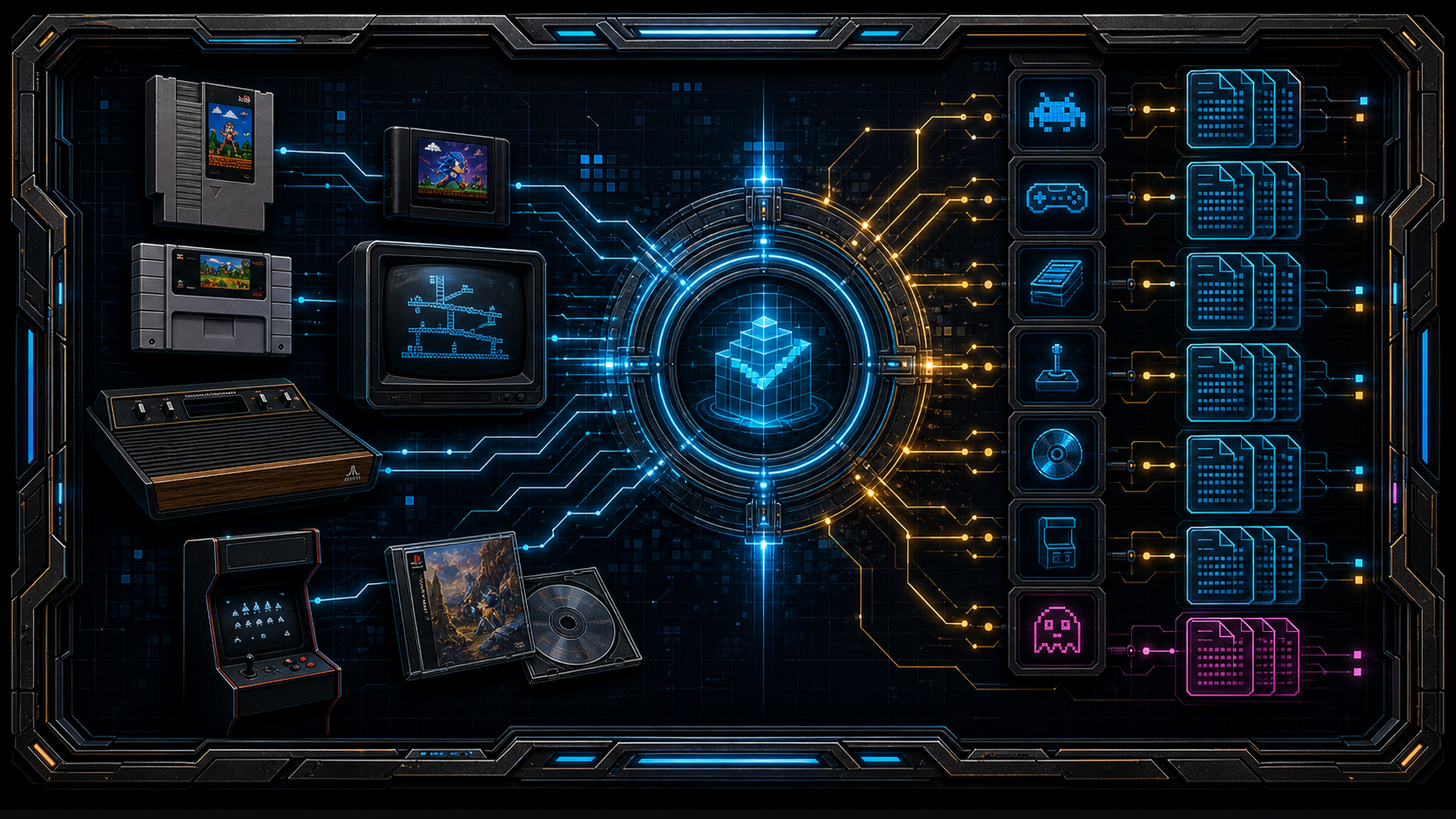
1. Authority Preparation
CURATOR prepares preservation DATs and supporting reference metadata before any collection work begins, establishing a trusted foundation for deterministic processing.
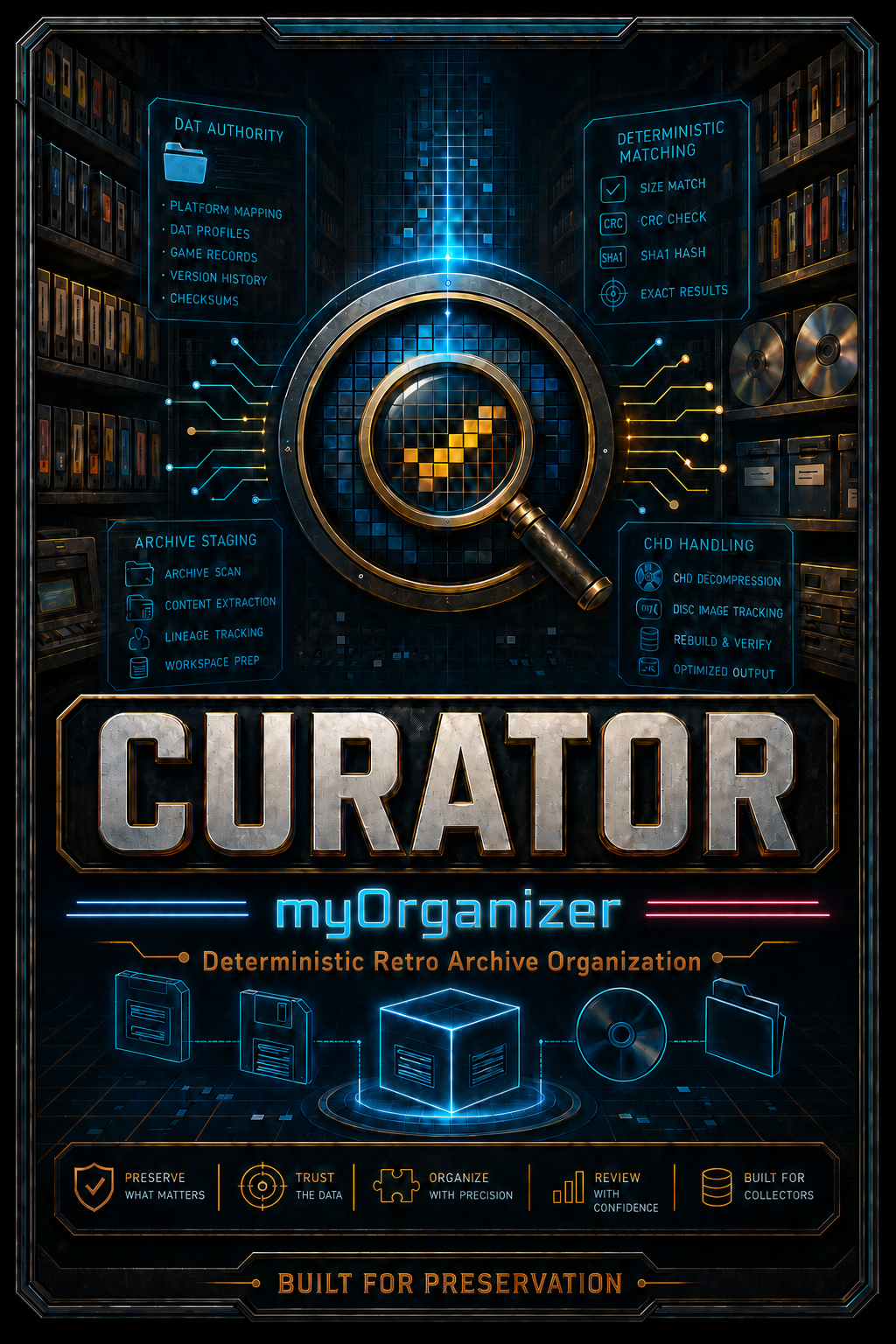
CURATOR analyzes, validates, reconstructs, and organizes emulation collections using DAT-based authority data.
Starting with user-provided source files, CURATOR prepares, validates, documents, and organizes every asset using trusted preservation metadata. Unknown, incomplete, and unsupported content is identified and separated so every decision remains transparent.
The result is a clean collection with a complete audit trail, making it easy to review, maintain, and update as preservation projects continue to evolve.
With myOrganizer: CURATOR v2.0.0-beta6, we have reached the end of this branch.
While this is still a work in progress, I have validated many Atari and SEGA sets and the application does a fairly accurate job. There is still a lot of validation to do, but as this is a personal project, it should be more than obvious that I am working with what I personally want for my collection. Of course, I welcome anyone who wants to personalize the application for their own desires to do so, by simply starting their own branch and providing source acknowledgement to me.
This for me is a good enough release to hold anyone over for now. The next branch, v2.5.xx is going to be a major restructuring of the application in many ways. The ulimate end goal is a single application script rather than the multi-stage method I am using right now. Remember, I'm not a professional programmer. I have dabled and this is my very first foray into even using AI as a development tool. I broke the application into stages to help me manage the development in my own way. I am absolutely certain that there are very many amazing coders that can do a better job than me. I just want to learn, at my age (57) how AI will be a part of my reality in the workspace I am a part of (Cloud Management/IT). I have not taken any courses at all. I simply dived in. If you view my site, you can find links to other things I have done while working on this application. In the beginning I spent a great many hours learning to even get the AI to stay within constraints; heck, I had to learn about constraints the hard way! But, overall, this has been both a frustrating and a very enlightening experience. I highly recommend trying it!
That being said, this next phase is going to see very few and limited beta releases. I will more than likely break the application with my next approach and that will definitely teach me a lot of new lessons. And I love learning, so it is not a bad thing.
So, for now. Stay tuned. Hopefully not too much time will pass for the very first v2.5.x release.
Happy gaming!
Discover how CURATOR turns source material and trusted preservation data into a validated, organized collection with a clear audit trail.
Prefer to watch on YouTube? Open the CURATOR video.
CURATOR transforms imperfect source material into a reproducible, preservation-ready collection through a deterministic workflow.
CURATOR prepares preservation DATs and supporting reference metadata before any collection work begins, establishing a trusted foundation for deterministic processing.
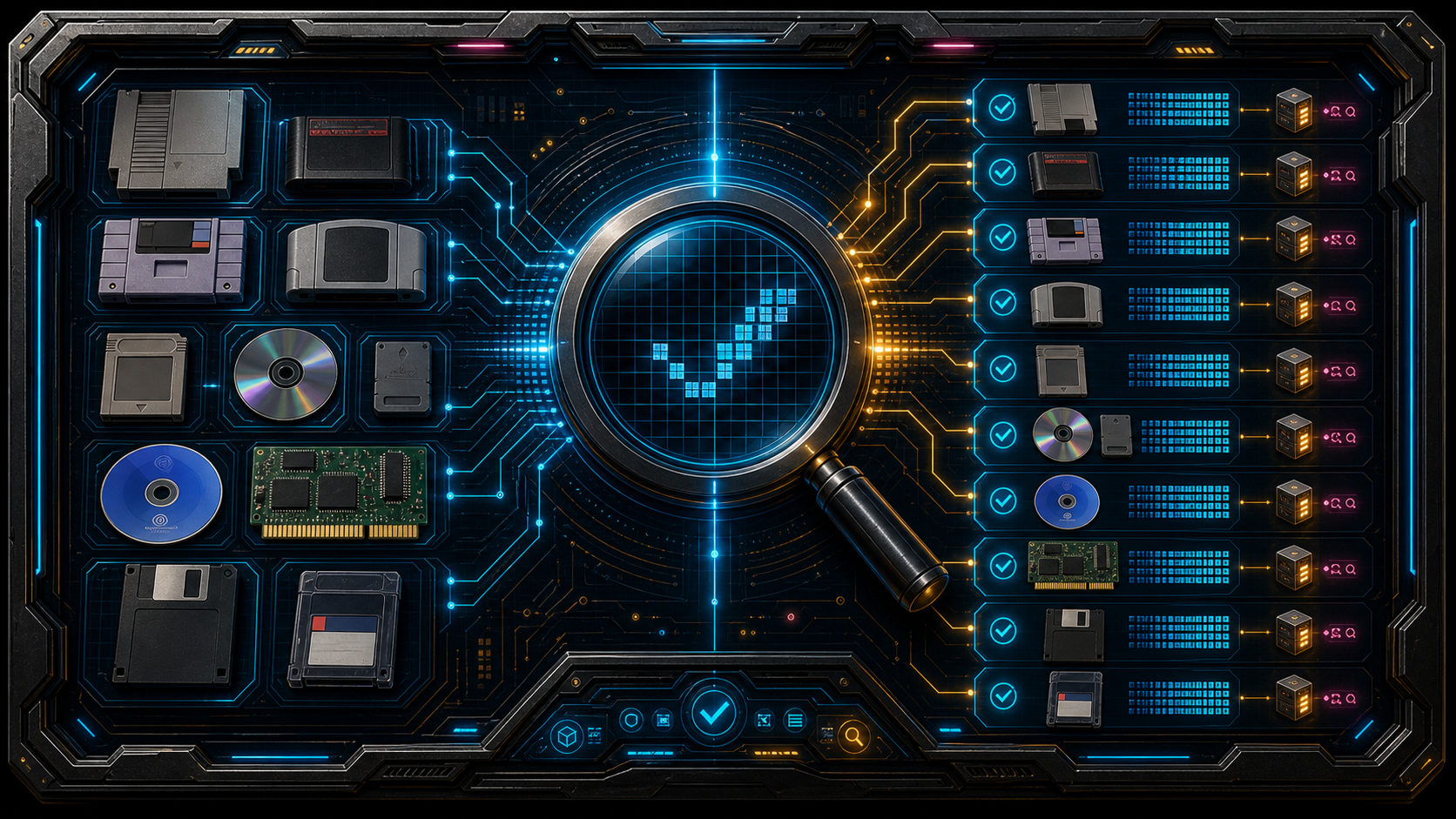
Every user-provided file is evaluated against trusted preservation metadata to identify known content, separate unknown material, and eliminate guesswork.
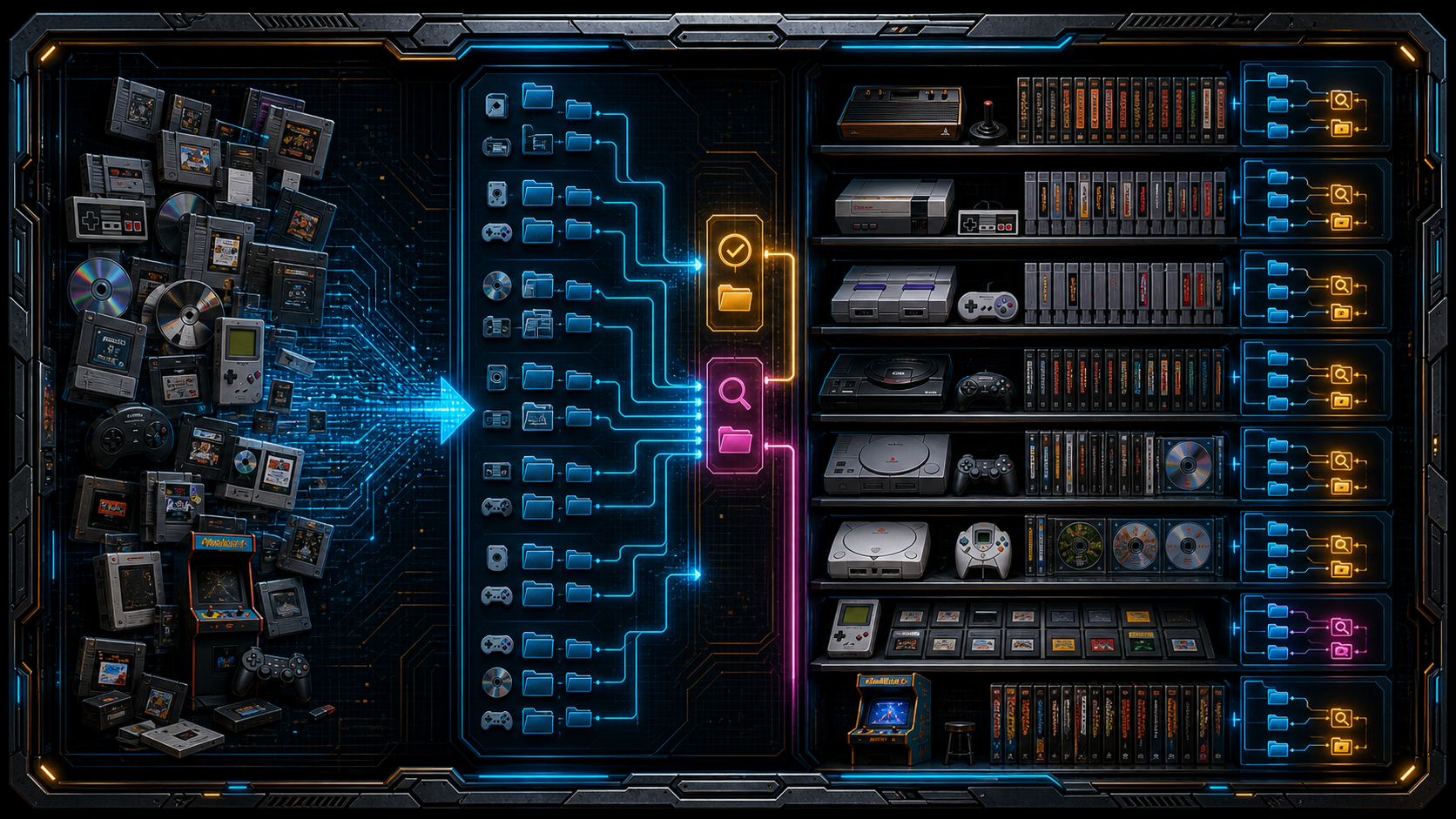
Verified content is organized into a structured, LaunchBox-ready library while preserving the relationship between source material, authority metadata, and final output.
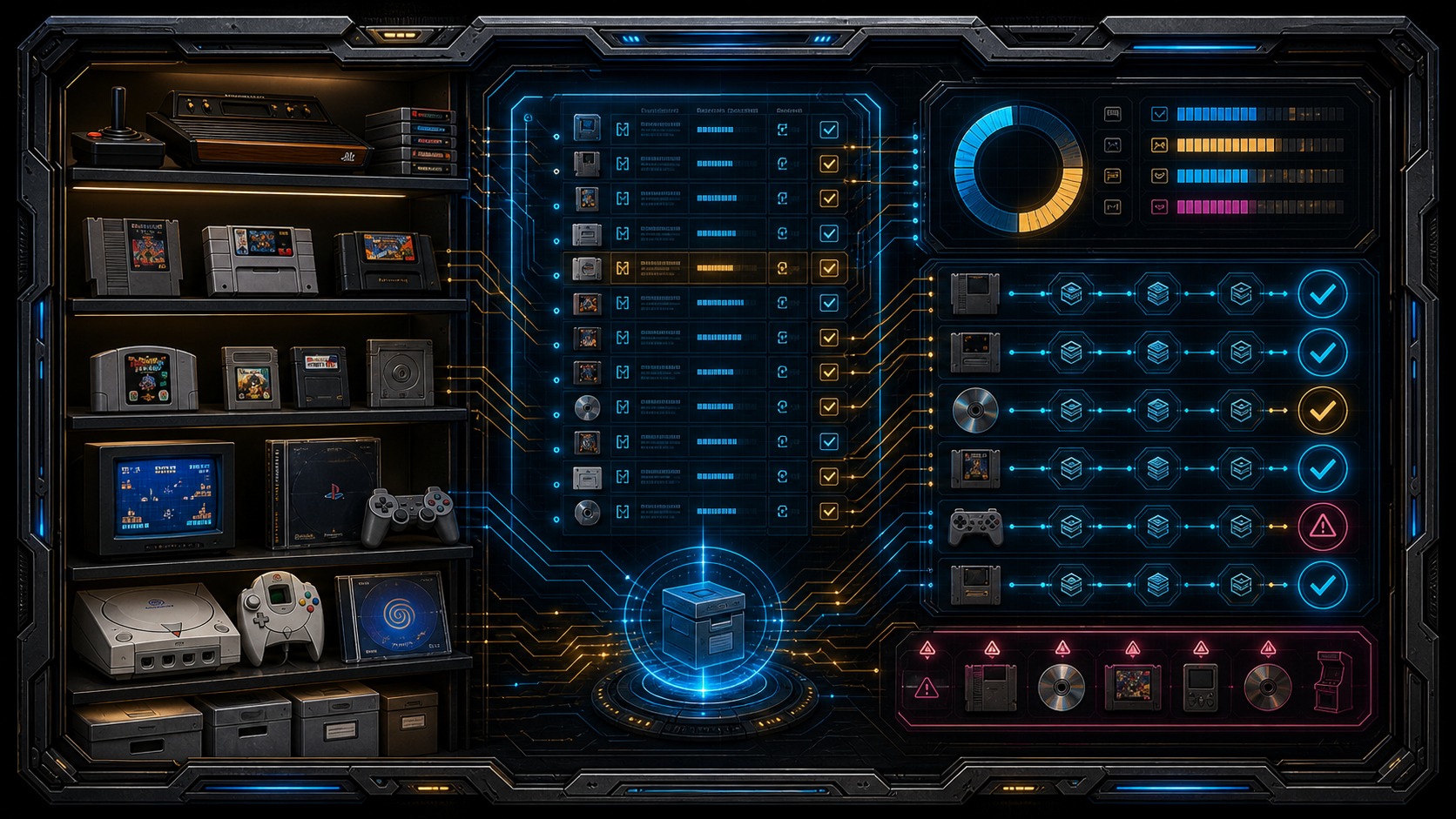
Every action is documented, allowing collections to be reviewed, reproduced, reconciled, and updated as preservation projects continue to evolve.
CURATOR is free, open-source software licensed under the GNU General Public License v3.0 or later.
CURATOR v2.0.0-beta.6 improves incomplete-set Append, catalogue folders, processing performance, recovery, supported optical media, and operator documentation.
CURATOR remains under active development. Current deferred public work includes FixDAT interoperability research and Windows decision-dialog design. Desktop application and compiled .NET questions remain future product direction rather than active engineering work.
These items are candidates, not promised features, priorities, schedules, or release commitments. Follow the maintained public roadmap on GitHub .
Review what changed in every public version, including improvements, fixes, and known limitations.
Read the maintained CURATOR changelog or browse every available download on the release archive.
My computing story began in the Atari 8-bit era, when software and friendships traveled through modems and BBSes.
Read about my early online communities, software projects, and the history that eventually helped shape CURATOR on the About Me page.
Questions, feedback, bug reports, and project discussions are welcome.
Email: contact@myorganizerhq.com
GitHub: myOrganizer-CURATOR